Notion's AI Agent Hub: Command Center for Future Productivity
Notion has unveiled its AI agent hub, transforming the platform into a dynamic center for building and deploying AI teams. This pivot aims to make work agent-driven, not just AI-assisted.
Published May 19, 2026 · 5 min read
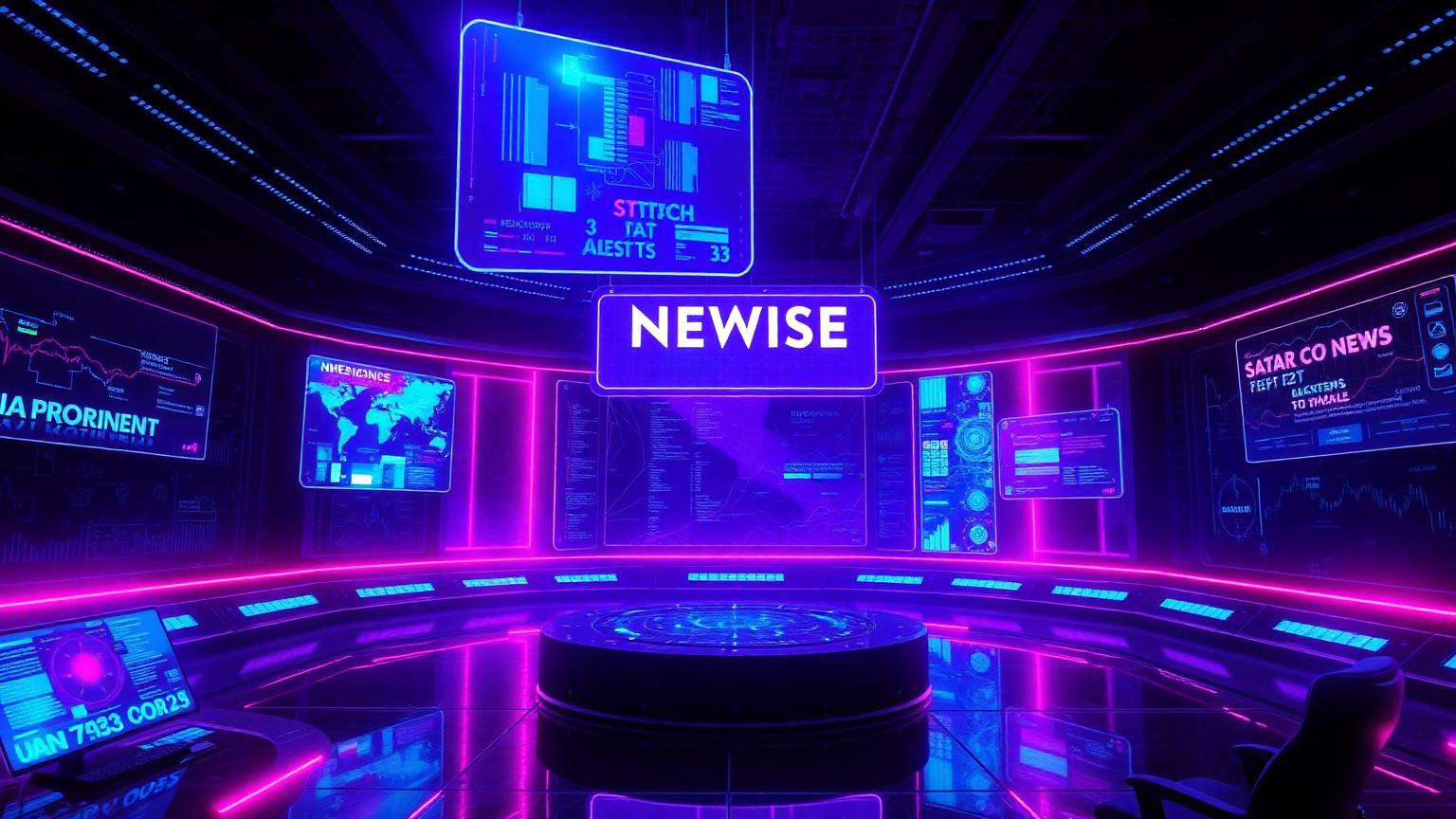
In a move that sends shockwaves through the productivity software landscape, Notion has just unveiled its most ambitious update yet. The platform, once lauded as the ultimate "second brain" for organizing information, is evolving into a central nervous system for AI agents. As of May 2026, Notion is no longer just a place to store your data; it's becoming a dynamic hub where you can build, connect, and deploy teams of AI agents to actively work on that data.
This announcement comes amidst a flurry of activity in the AI space, with agentic hubs becoming the industry's hottest new battleground. With competitors like Cursor launching Composer 2.5 for AI-native development and OpenAI targeting personal finance with its latest ChatGPT update, Notion's strategic pivot redefines its role in the modern tech stack. It’s a bold declaration that the future of work isn't just AI-assisted—it's agent-driven. This isn't about asking an AI to write a paragraph anymore. This is about commanding an AI agent to manage an entire project. Let's break down what this new, agentic Notion means for teams and the future of productivity software.
Key Takeaways
For those short on time, here are the crucial points from Notion's landmark announcement:
- From Passive Docs to Active Agents: Notion is transforming from a knowledge repository into an active workspace where AI agents can execute complex, multi-step tasks.
- New Developer Platform: Notion has launched a full-fledged developer platform with SDKs, allowing developers to build custom AI agents that live and operate directly within a Notion workspace.
- Universal Agent Connector: Users can now connect and orchestrate third-party agents from major players like OpenAI, Anthropic, and Google, creating a single command center for various AI models.
- No-Code "Agent Composer": A visual, drag-and-drop workflow builder allows non-technical users to chain together agent actions, automating processes that previously required significant manual effort.
- The Workspace as an OS: This update positions Notion as a potential "operating system" for agentic work, coordinating tasks across different departments and software tools, fundamentally changing its competitive position against Slack, ClickUp, and Microsoft.
Decoding Notion's AI Agent Hub: The Core Announcements
Notion's announcement wasn't just a single feature drop; it was the unveiling of a comprehensive ecosystem designed to put agentic AI at the core of every team's workflow. This ecosystem is built on three foundational pillars.
1. The Notion Agent Developer Platform
The centerpiece of the update is a brand-new developer platform. This is Notion's invitation to the global developer community to build a new class of applications: native AI agents. The platform provides robust Software Development Kits (SDKs), reportedly for Python and TypeScript initially, that allow developers to create custom agents with deep access to the Notion workspace.
These aren't simple API scripts. These agents can:
- Read, write, and update Notion databases and pages with contextual awareness.
- Trigger workflows based on changes within the workspace (e.g., a database property changing from "In Progress" to "Review").
- Understand the structure and relationships between different databases and pages, allowing for more sophisticated reasoning.
- Retain memory of past interactions and data points to inform future actions.
This platform effectively turns every Notion workspace into a potential development environment, empowering companies to build bespoke AI assistants tailored to their unique processes.
2. The Universal Agent Connector
Recognizing that no single AI model rules them all, Notion has wisely chosen to be an open and neutral hub. The Universal Agent Connector is an abstraction layer that allows users to plug in and leverage agents from external providers. At launch, this includes support for top models from OpenAI (GPT-5 and beyond), Anthropic (Claude 4 series), and Google (Gemini's next iteration).
This means a user could, for example, use a Google agent for its powerful data analysis capabilities on a sales spreadsheet, an Anthropic agent for nuanced, long-form content summarization, and a custom-built internal agent for proprietary knowledge retrieval—all within the same workflow. This "bring your own agent" (BYOA) model is a strategic masterstroke, preventing vendor lock-in and allowing teams to use the best tool for each specific job.
3. The "Agent Composer": No-Code AI Orchestration
Perhaps the most impactful feature for the majority of users will be the "Agent Composer." This is a visual, no-code/low-code interface for building agentic workflows. Think of it as Zapier or Make, but designed specifically for orchestrating AI agents within your knowledge base.
Using a drag-and-drop canvas, a marketing manager could build a workflow like this:
- Trigger: When a new row is added to the "Competitor News" database.
- Action 1 (External Agent): Send the URL from the new row to an OpenAI agent with the prompt, "Summarize this article in 3 bullet points and perform a sentiment analysis (Positive, Neutral, Negative)."
- Action 2 (Notion Agent): Write the summary into the "Summary" property and the sentiment into the "Sentiment" property of the new row.
- Condition: If "Sentiment" is "Negative" and the article mentions our company name...
- Action 3 (Internal Agent): Create a new page in the "PR Crisis Hub," tag the Head of Comms, and link to the original article and summary.
This empowers every team member, not just engineers, to become an architect of automation, designing intelligent systems to handle repetitive and complex information-processing tasks.
How It Works: Under the Hood of the Agentic Workspace
So, how does Notion pull this off? While the user-facing tools are designed for simplicity, the underlying architecture is a sophisticated blend of APIs, data models, and execution environments.
The Agent Execution Layer
At its core, Notion has built a new execution layer within its infrastructure. When a workflow is triggered, the Agent Composer translates the visual a into a sequence of calls.
- For internal agents: The call is routed to a secure sandbox environment where the developer-built agent code runs. This code uses the Notion SDK to interact with the workspace data directly and securely.
- For external agents: The call is routed through the Universal Agent Connector, which formats the request for the specific third-party API (e.g., OpenAI's API). It sends the necessary data, receives the response, and then passes it to the next step in the workflow.
This hybrid model gives teams the security and context-awareness of internal agents combined with the raw power and specialized capabilities of large language models from market leaders.
Deeply Integrated Data and Context
The real magic, and Notion's key differentiator, is the agent's native access to the workspace graph. An agent doesn't just see a single page or database row in isolation. It can understand that a Project Task in one database is linked to a Meeting Note in another, which is assigned to an Employee in a third.
This rich, structured context is what separates Notion's approach from simple API wrappers. An agent can be prompted to "summarize all recent progress on Project Phoenix," and it can traverse these linked databases to gather tasks, meeting notes, and documents to create a truly comprehensive summary. This is a monumental step up from the first generation of AI assistants that primarily focused on generating text on a single page.
Why This Matters: The Shift from Productivity Tool to Agentic OS
This update is more than just an iteration; it's a fundamental re-imagining of what a productivity tool can be. For years, platforms like Notion have helped us manage an ever-growing mountain of information. Now, they are helping us act on that information at scale.
This signifies the transition from Software-as-a-Service (SaaS) to Intelligence-as-a-Service (IaaS). The value is no longer just in the software's features, but in its ability to deploy and coordinate intelligent agents that generate tangible outcomes.
By becoming a central hub for various AI agents, Notion is positioning itself as the de facto operating system for a company's collective intelligence. It becomes the place where human knowledge (stored in docs and databases) meets machine intelligence (executed by agents), creating a powerful synergy. This move could cement Notion's place not just as a tool for thought, but as a command center for action. For more on how AI is reshaping business, check out our analysis on AI for Business.
Notion vs. The Competition in the Agentic Era of 2026
Notion doesn't operate in a vacuum. The race to build the dominant agentic work hub is on. Here’s how Notion's new strategy stacks up against its main rivals.
Notion vs. Slack
- Core Philosophy: Slack remains a communication-first platform. Its AI and agents live within channels and threads, focused on summarizing conversations, answering questions based on chat history, and triggering workflows from messages.
- Notion's Edge: Notion is knowledge-first. Its agents operate on structured data and long-form documents. While Slack's AI is great for real-time conversational tasks, Notion's is built for deep, asynchronous work and complex information synthesis. You'd use Slack's agent to get a quick summary of a channel's morning discussion; you'd use Notion's agent to write a complete Q1 performance review by analyzing six months of project data.
Notion vs. ClickUp
- Core Philosophy: ClickUp is a project-management-first tool. Its AI is hyper-focused on optimizing tasks, generating sub-tasks, predicting project timelines, and automating status reports.
- Notion's Edge: Notion's approach is more holistic. While a ClickUp agent might manage a project plan, a Notion agent can connect that plan to the underlying research, meeting notes, and final deliverable documents. Notion's advantage is its ability to be the connective tissue across the entire project lifecycle, from ideation to documentation, not just the task management layer.
Notion vs. Microsoft Loop & Copilot
- Core Philosophy: Microsoft's strategy is ecosystem-first. Copilot and Loop agents are deeply embedded across the entire Microsoft 365 suite (Teams, Word, Excel, Outlook). Their power comes from their seamless integration within this closed, but immensely popular, ecosystem.
- Notion's Edge: Notion's strength is its platform neutrality. It aims to be the central hub that connects to everything, including the Microsoft ecosystem, Google Workspace, Slack, and more. For companies that embrace a best-of-breed software strategy, Notion offers a central, agnostic command center that Microsoft, by its nature, cannot. It’s the "Switzerland" of agentic productivity.
Notion vs. Coda
- Core Philosophy: Coda has long been Notion's closest competitor, blending docs and apps. Coda's "Packs" were an early form of tool integration, and its AI features have been robust.
- Notion's Edge: With this update, Notion has made a more decisive leap into agent orchestration. While Coda's AI is powerful within a Coda doc, Notion's new platform and Universal Connector are about creating a meta-layer above individual tools. Coda helps you build a doc that is a powerful app; Notion now helps you build a workspace that commands an army of agents across multiple apps. As TechCrunch notes in its analysis, "[Notion is] betting the future isn't a better document, but a workspace that can command other services."
Real-World Use Cases for the Agentic Notion Workspace
The abstract concepts of "agentic workflows" come to life when applied to the daily grind of different teams. Here are some practical examples:
For Marketing Teams
- Campaign Content Engine: A "Campaign Manager" agent could be triggered when a new marketing campaign is created in a database. It would then automatically:
- Create a project folder with standard sub-pages (Creative Brief, Ad Copy, Performance Metrics).
- Use a Claude 4 agent to draft initial ad copy and blog post ideas based on the campaign brief.
- Assign tasks to the design and copy teams with deadlines calculated from the launch date.
- Monitor a specified hashtag on social media and pull relevant user-generated content into a gallery view in the campaign page.
For Engineering Teams
- Intelligent Bug Triage: A "Triage Bot" agent can be connected to GitHub or Jira.
- When a new bug is filed, the agent ingests the report.
- It searches the Notion engineering knowledge base and past bug-fix databases for similar issues and solutions.
- It automatically adds relevant context, links to past tickets, and a preliminary priority level (e.g., P1, P2) based on keywords in the report.
- Finally, it assigns the ticket to the on-call engineer for that product area, all before a human even looks at it.
For Operations & HR Teams
- Automated Employee Onboarding: A new hire is added to the "Employees" database. This triggers an "Onboarding Buddy" agent that:
- Creates a personalized onboarding dashboard for the new employee by duplicating a template.
- Populates the dashboard with their name, team, and manager.
- Assigns a checklist of Day 1 tasks, like "Set up your password manager" and "Read the company mission."
- Uses a calendar-aware agent to schedule introductory 1-on-1s with their manager and key team members, finding mutually available time slots.
For Founders & Executives
- The Autonomous Chief of Staff: A founder can design a "Daily Briefing" agent.
- Every morning at 8 AM, the agent pulls key metrics from marketing, sales (via a Salesforce-connected agent), and engineering project boards.
- It uses an OpenAI agent to summarize the progress and flag any blockers or anomalies.
- It pulls the top 3 company mentions from a media monitoring service.
- It compiles all this into a clean, concise briefing page in the founder's private Notion section, complete with charts and bullet points, ready for their morning coffee.
Limitations and Risks to Consider
Despite the immense potential, the transition to an agentic workspace is not without its challenges.
- Data Privacy & Security: A primary concern will be the flow of potentially sensitive company data to third-party agent providers like OpenAI. Companies will need clear governance and data masking policies. Notion's emphasis on custom, on-premise, or VPC-hosted internal agents might be a solution for highly regulated industries. For an overview of AI news, including security discussions, see our AI News Updates category.
- Agent Reliability and "Hallucinations": AI agents, like the LLMs they are built on, can still make mistakes, misinterpret instructions, or "hallucinate" information. An agent autonomously making incorrect changes to a critical database could have serious consequences. Robust version history, human-in-the-loop approval steps, and rigorous testing will be essential.
- Cost Management: Orchestrating multiple powerful AI agents could become expensive. Each agent run, especially those calling premium external models, will incur a cost. Without careful monitoring, these token-based micro-transactions could add up to a significant monthly bill.
- Complexity and Over-Automation: There's a risk of creating brittle, overly complex webs of automation that are difficult to debug when they break. Teams may also be tempted to automate tasks that benefit from human nuance and critical thinking, potentially de-skilling employees over time.
Pricing and Availability
Notion has not yet announced official pricing, but based on industry trends and the scope of these features, we can speculate on the rollout:
- Tiered Rollout: Expect the Agent Developer Platform to be released first in a private beta for select enterprise customers and partners. The Agent Composer and Universal Agent Connector will likely follow, rolling out to Team and Enterprise plans first.
- New Pricing Model: It's highly probable that this will introduce a new pricing vector beyond the standard per-seat license. This could take the form of:
- A premium "AI Agent" add-on package per user.
- A usage-based model based on the number of "agent runs" or tokens consumed, similar to cloud computing pricing.
- A new, higher-priced "Enterprise Plus" or "Agentic" tier that includes a generous allowance of agent usage.
A free or a limited trial version will almost certainly be available to encourage adoption and allow users to experiment with building basic workflows. Consult the official Notion Blog for the latest announcements.
A Glimpse into the Future: 2026 and Beyond
Notion's announcement is a powerful signal for the entire software industry. The future of productivity is not just about having AI in our apps; it's about our apps becoming platforms to conduct AI.
We are witnessing the rise of the agentic productivity stack, where a central hub like Notion acts as the conductor of an orchestra of specialized AI agents. This model suggests a future where your core workspace is less a collection of static files and more a dynamic dashboard of autonomous employees. This shift will force every SaaS company to ask: are we a destination where work gets stored, or are we a platform where work gets done by a combination of humans and AI? As The Verge puts it, "The apps that win the next decade will be the ones that best manage the collaboration between people and their AI counterparts."
This is a foundational step towards the long-term vision of a truly personalized, autonomous AI assistant that understands your work, your team, and your goals, proactively managing your digital life. The future of AI is unfolding rapidly, and platforms like Notion are building the stages on which it will perform. To stay updated on what's next, explore our section on the Future of AI.
Conclusion
Notion's transformation into an AI agent hub is arguably the most significant evolution in the company's history. By launching a developer platform, integrating with major AI providers, and providing a no-code composer for an agentic workflow, Notion has radically expanded its value proposition. It has moved beyond being a best-in-class tool for thought and knowledge management to become a powerful contender for the central operating system of the modern, AI-powered workplace. While challenges around security, cost, and reliability remain, the message is clear: the era of the passive document is over. The future belongs to the active, intelligent, and agentic workspace. Notion just placed a massive bet that it can be the one to build it.
This has been a deep dive into Notion's new agentic workspace. For more expert analysis on the latest breakthroughs in artificial intelligence and how they impact your business and career, explore more articles at AINewsDaily. Our team is constantly monitoring the trends that matter, providing you with the insights you need to stay ahead in a rapidly changing world.
Frequently asked questions
What is Notion's new AI agent hub?
Notion's AI agent hub, launched in May 2026, transforms Notion into a dynamic platform where users can build, connect, and deploy teams of AI agents to work actively on their data and projects.
How does the AI agent hub change Notion's role?
It shifts Notion from a passive information organizer to an active workspace where AI agents can execute complex, multi-step tasks, positioning it as a potential 'operating system' for agentic work.
What are the core components of this new ecosystem?
The ecosystem is built on a new developer platform for native AI agents, a Universal Agent Connector to integrate third-party agents, and a no-code 'Agent Composer' for visual workflow building.
Sources
Stay ahead of the AI curve
New tools and breakthroughs every day. Read more from AINewsDaily.
Browse latest articles